2026 Brand Watch: Doimo Cucine, Stocco, and Cerasa Expand Their Reach

Not every piece of brand news is about a flashy new product. Sometimes the bigger story is where a brand is heading — new markets, new collaborators, new categories. This year, three Italian names on our radar all made moves worth flagging: Doimo Cucine on the global stage, Stocco in the bathroom, and Cerasa crossing the Channel for the first time.

Doimo Cucine: A Brand Refresh and a Global Push

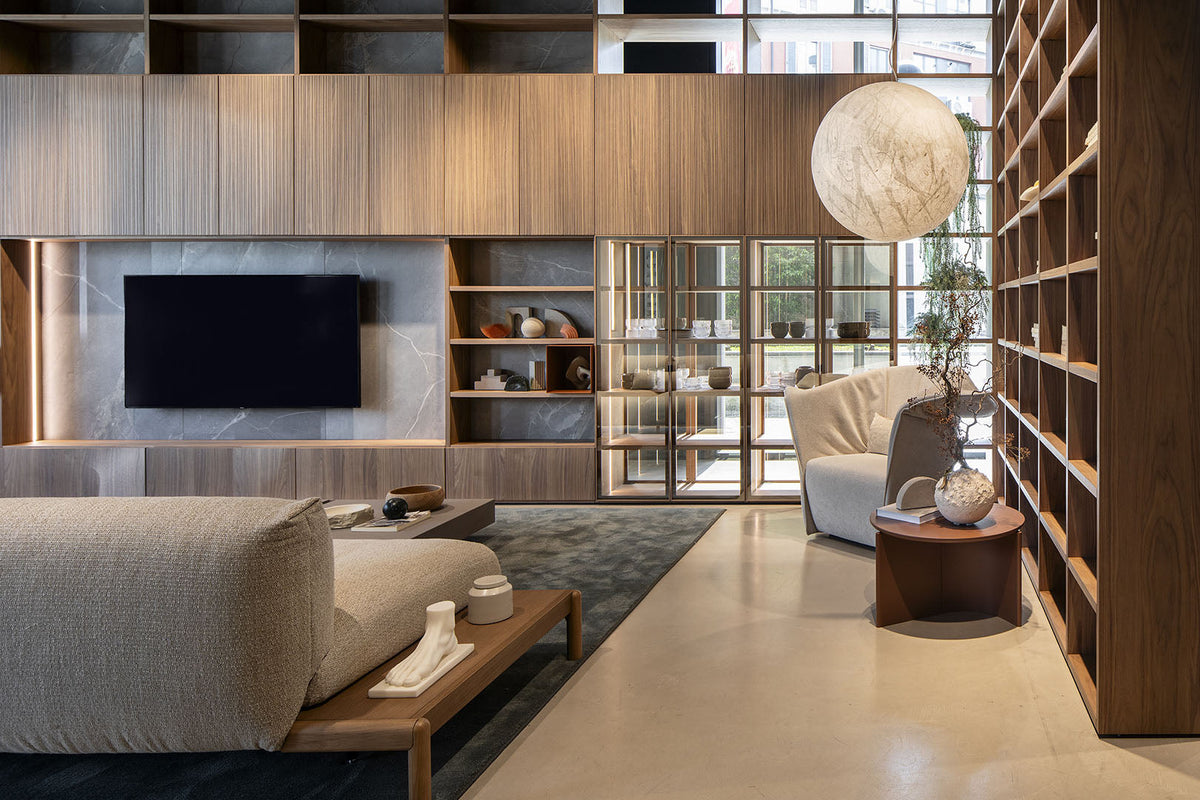
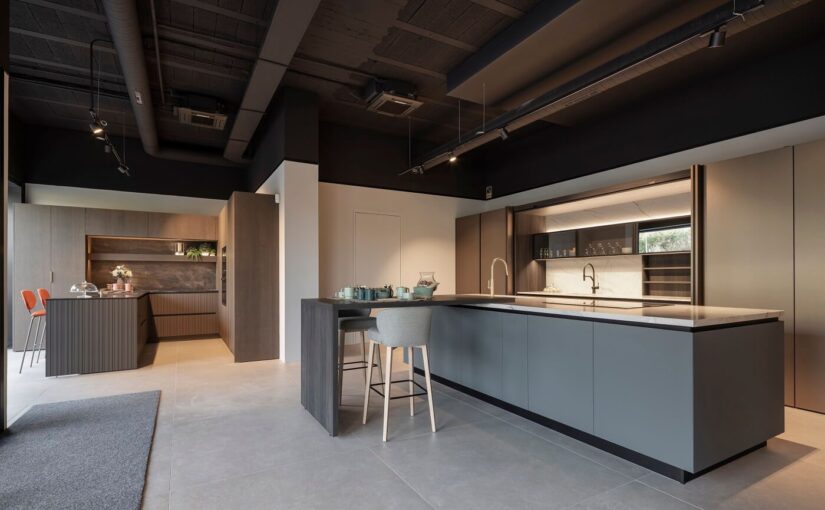
Doimo Cucine closed out its 2025 fiscal year with real momentum, and 2026 is shaping up to be its biggest expansion push yet. The Veneto-based kitchen maker has opened new showrooms in Casablanca and near Cannes, with a flagship store in Panama City planned for later this year. Closer to home, the brand continues to grow in the UK and France, with a new Paris location on the way, alongside renewed activity in Belgium, Croatia, Tirana, and Cyprus.

Doimo Cucine showroom expansion 2026
A Doimo Cucine “Cocina Boutique” showroom, part of the brand’s 2026 international expansion. Photo courtesy of Doimo Cucine.

Spain remains a particular focus, with recent openings in Lorca, Motril, Vilanova i la Geltrú near Barcelona, and A Coruña — all through local design partners aligned with the brand’s aesthetic. More than 30% of the company’s current initiatives are dedicated to upgrading existing Spanish showrooms toward a more premium positioning.

Behind the scenes, the brand’s design direction has been shaped since 2025 by a collaboration with acclaimed designer Ferruccio Laviani, whose Milan studio now guides Doimo’s strategic vision — both the compositional logic of the kitchens themselves and the visual language used to present them. That partnership is behind 2026’s brand refresh, visible across the company’s communications and digital presence, as well as the new Impronta collection, Laviani’s own translation of Doimo’s kitchen philosophy into material, function, and identity.

Stocco: Softer Forms for the 2026 Bathroom

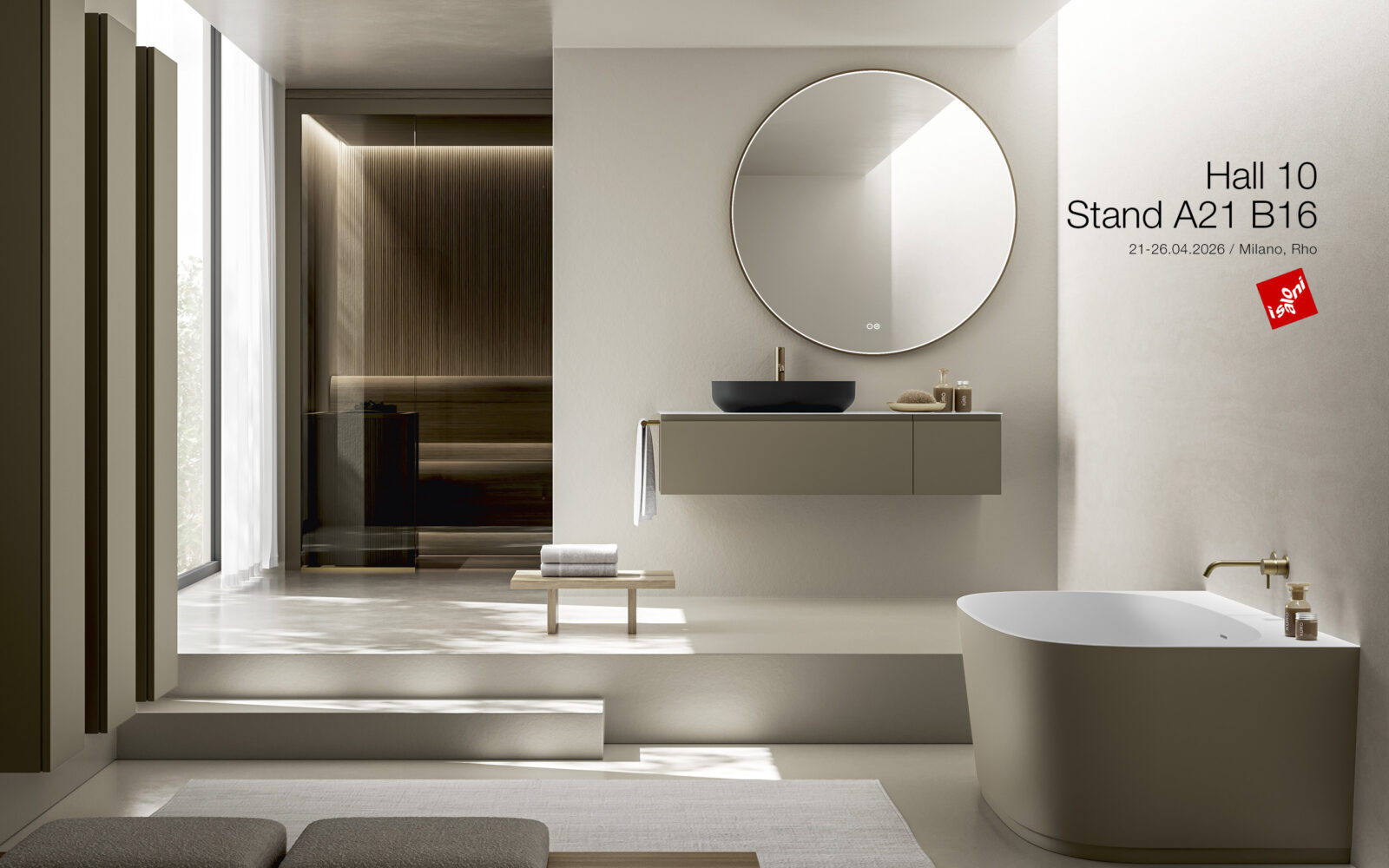
At Salone del Mobile 2026, bathroom furniture specialist Stocco previewed a collection built around what the brand calls “design in motion” — not nostalgic, but reflective, expressed through soft forms, refined textures, and warm color palettes.

Stocco Salone del Bagno 2026 bathroom collection
Stocco’s 2026 bathroom collection, presented at Salone del Mobile. Photo courtesy of Stocco.

The standout update is to two of Stocco’s core systems, Over and Stilo, both now available with new curved end units that soften the geometry of a bathroom composition. The Fit washbasin platform expands too, with compact, minimalist-friendly configurations aimed at smaller spaces without sacrificing elegance. Elsewhere, the Loop collection gains back-lacquered glass drawer fronts across Stocco’s full color range, and washbasins and bathtubs are now available in that same palette for a fully coordinated look. A new Fly handle rounds out the opening-system options, and curved shapes join the brand’s backlit mirror lineup.

The overall direction: intense, warm, deep tones and softened geometry, continuing a broader move away from hard edges across bathroom and kitchen design alike.

Cerasa: A UK Debut for Des Evolution

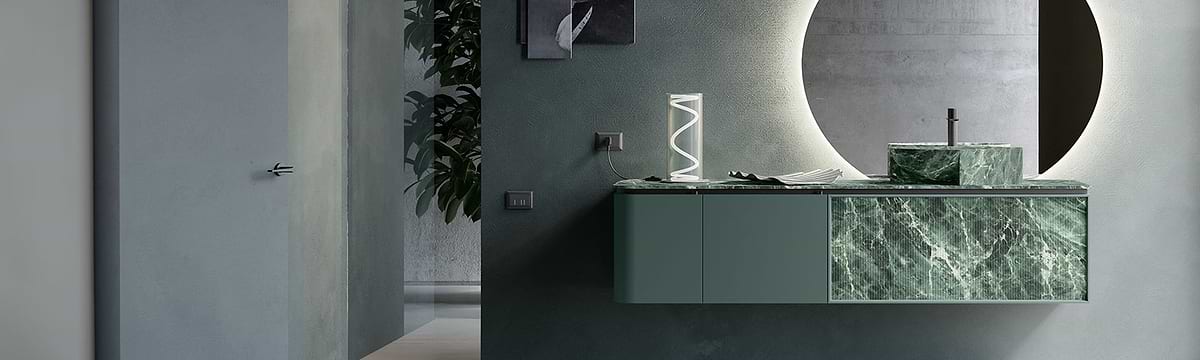
Italian bathroom furniture maker Cerasa, in business for more than 40 years, has brought its Des Evolution collection to the UK for the first time through a first-to-market launch with retailer C.P. Hart. Designed by Stefano Spessotto, the range is built around flexibility: vanities are available with an integrated basin, or paired with either the deck-mounted Zefiro or EOS basin — both of which are also offered as freestanding pieces. Separate storage units and mirrors round out the composition options.

Cerasa Des Evolution bathroom collection UK launch
Cerasa’s Des Evolution collection, launched in the UK with C.P. Hart. Photo courtesy of Cerasa / C.P. Hart.

Finish choice is where Des Evolution really stretches: more than 80 options are available, including matte lacquers and a striking Resina Paint and Stone Deckblend textured resin designed to closely mimic natural stone. It’s a strong example of how much visual range a single bathroom furniture system can now offer without leaving the same design family.

The Common Thread

Different categories, same underlying story: established Italian brands are actively investing in reach, whether that’s new geography (Doimo), new material softness (Stocco), or new markets entirely (Cerasa). For anyone planning a kitchen or bathroom renovation, that kind of sustained investment is a good signal — it usually means more design partners, more finish choices, and more support behind the products you’re specifying.

Want to see how these collections translate into a real project? Book a consultation with our team — or Get a Quote to get started on your kitchen or bathroom.

Italian Kitchen Watch: Arrital and Binova Unveil Their 2026 Vision

Milan Design Week has a way of resetting the conversation for Italian kitchen brands, and this year two names on our radar used it to make a genuinely bigger point: the kitchen isn’t a room anymore, it’s the anchor of the whole home. Here’s what Arrital and Binova just showed the world, and why it matters if you’re planning your own kitchen.

Arrital: From Kitchen System to Home Ecosystem

At Milan Design Week 2026, Arrital took its Ak Project kitchen system somewhere new. Rather than presenting another collection of standalone pieces, the brand unveiled what it calls a “home ecosystem” — a cohesive language that carries the kitchen’s architecture into the living room, storage, and even outdoor spaces.

Arrital Milan Design Week 2026 kitchen and living ecosystem
Arrital’s 2026 home ecosystem, unveiled at Milan Design Week. Photo courtesy of Arrital.

The kitchen itself leans further into an architectural feel this year: clean volumes, seamless surfaces, and 45-degree joints give Ak Project an almost monolithic presence that organizes a room rather than simply filling it. Storage takes on a new role too. New pieces like Index, a flowing bookshelf-meets-display system, and the Circle sideboard extend that same visual language into the living area, while the Modus table balances a light, airy profile with real material presence.

A few details stood out to us:

  • Secto, a modular, interchangeable partition with a slatted structure, keeps rooms open and connected while still defining separate zones — and it can be finished to match Arrital’s kitchen, living, or bathroom lines.
  • The Pass System door offers an elegant way to divide spaces without losing flow between them.
  • Outdoors, the new Solaria collection and its Ombralux shade accessory extend Arrital’s design language beyond the four walls entirely, making outdoor living usable and dynamic through the day.

The throughline across all of it: storage and connection are no longer afterthoughts. They’re treated as design elements in their own right, coordinated down to interior and exterior finishes.

Binova: Softer Volumes, One Continuous Home

Binova’s 2026 catalogue makes a similar leap, moving the kitchen out of isolation and into what the brand describes as a true “living continuum” — a single, coherent scheme that flows from the kitchen through the rest of the day zone.

Binova Bluna plus Zen kitchen composition 2026
Binova’s Bluna + Zen composition, presented at Salone del Mobile 2026. Photo courtesy of Binova.

The headline pieces are reworked versions of two Binova favorites, Bluna and Balance, both softened with new curved end units that round off what used to be sharp corners. In the Bluna project shown at Salone del Mobile, a striking island in Ebano Makassar wood-effect composite is framed by twin curved volumes and finished with Stone handles in Breccia Imperiale-textured grès — a material and handle pairing designed to feel sculptural rather than purely functional. A parallel Bluna + Zen composition introduces glass display cabinets integrated directly into the base units for the first time, a detail previously reserved for tall storage only.

Binova also brought real material innovation to the table: a renewed range of composite woods, an acrylic glass-effect laminate that’s picked up multiple design awards, and a new acid-etched glass finish for cabinet doors that mimics the look of raindrops running down a windowpane. And in a notable first for the brand, Binova unveiled its debut line of non-kitchen storage systems — wardrobes and closets built on the same design language, signaling the brand’s ambitions well beyond the kitchen.

Why This Matters for Your Kitchen

Both brands are pointing at the same shift: the kitchen is increasingly designed as one continuous statement with the rest of the home, not a room that stops at its own doorway. If you’re planning a renovation, that’s a useful cue — matching finishes, storage logic, and material language across the kitchen and adjoining living space is what reads as considered, not incidental, in 2026.

It’s also a reminder that the details worth asking about aren’t just door colors and countertop stone. Ask how storage is designed to connect spaces, whether curved or softened volumes are available in the lines you’re considering, and what material innovations (like acid-etched glass or acrylic laminates) might be worth specifying.

Curious how these ideas could translate into your own kitchen? Book a consultation with our design team to explore European systems like these in person — or Get a Quote to get started.