Walk into almost any kitchen being designed in 2026 and you’ll notice the same quiet shift: the cabinetry has stopped shouting. The ornate, heavy fronts that dominated a decade ago have given way to cleaner lines, richer materials, and construction borrowed almost entirely from the Continent. If you’re planning a renovation — or simply love good design — these are the European kitchen cabinet styles worth knowing before you make a single decision.
Europe never really had an “all-white kitchen” era to recover from. For decades, German, Italian, and Scandinavian makers treated the kitchen as furniture-grade architecture: precision-built, seamlessly integrated, and designed to last. That philosophy is now the global benchmark. According to the National Kitchen & Bath Association’s 2026 trends report, frameless construction and flat slab doors are among the fastest-growing specifications in the market — and both trace directly back to European workshops.
Below are ten distinct styles, from the engineering-led German box to the sun-warmed French country cabinet. Each one solves a different problem and sets a different mood, so think of this less as a ranking and more as a vocabulary for describing exactly the kitchen you want.
1. German Frameless (the Euro-box)
If there’s a foundation beneath every other style on this list, it’s German frameless construction. Instead of mounting doors to a hardwood face frame — the traditional American approach — the doors and drawers attach directly to the cabinet box. The result is a full-overlay front with almost no visible gaps, and roughly 15% more usable interior space because there’s no frame narrowing the opening.
What makes it feel unmistakably German is the tolerance. These boxes are cut on CNC machines to fractions of a millimetre, then hung on precision hardware from names like Blum and Hettich. Drawers glide and stop themselves; doors close with a whisper. It’s the least decorative style here and, paradoxically, the most demanding to build well.
Best for: Modern and contemporary kitchens where seamless lines matter more than ornament.
2. Handleless (J-Pull and Integrated Finger Pull)
The single most influential detail in contemporary European design is the disappearing handle. Rather than knobs or bar pulls, handleless cabinets use one of two tricks: a routed “J-pull” channel along the top edge of the door, or a recessed finger gap built into the carcass so you open the door by reaching behind it. Push-to-open and touch-latch mechanisms take it even further, removing hardware entirely.
The payoff is visual calm. With nothing interrupting the fronts, the material itself becomes the focal point, and runs of cabinetry read as a single architectural plane. It’s the detail that makes a kitchen look built-in rather than furnished.
Best for: Minimalist, open-plan spaces where you want the kitchen to recede into the architecture.
3. Italian High-Gloss Lacquer
Where German design leans engineered and restrained, Italian cabinetry has always embraced drama. High-gloss lacquer fronts — layered, sanded, and polished to a mirror finish — bounce light around a room and make even a compact kitchen feel expansive and luxurious. In deep colours like graphite, oxblood, or midnight blue, the effect is unmistakably high-end.
Gloss demands discipline, though. Fingerprints and fine scratches show more readily than on matte, so this style rewards good ventilation, quality finishes, and a household that doesn’t mind the occasional wipe-down. Done right, nothing else reads quite as glamorous.
Best for: Ultra-modern, luxury-forward kitchens and smaller rooms that benefit from reflected light.
4. Matte Lacquer Minimalist
If gloss is the extrovert, matte is the introvert — and in 2026 it’s winning. Roughly 70% of painted cabinet orders now specify a matte or satin sheen. Matte lacquer absorbs light instead of reflecting it, giving fronts a soft, velvety, almost suede-like surface that hides fingerprints and feels wonderfully tactile.
Paired with the warm neutral palette dominating this year — mushroom, taupe, greige — matte fronts create a kitchen that feels calm and grounded rather than clinical. It’s the finish that made the cool, sterile look of early minimalism feel warm and livable again.
Best for: Contemporary kitchens that want minimalism with warmth and low-maintenance surfaces.
5. Scandinavian Light Oak
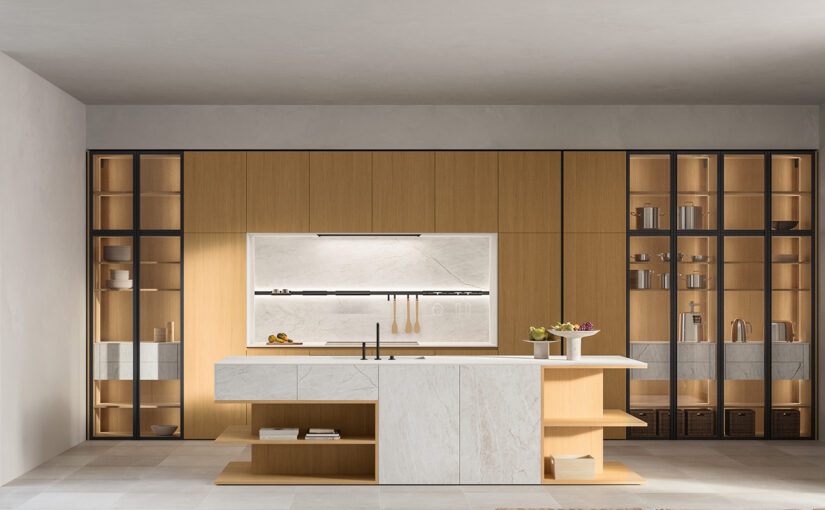
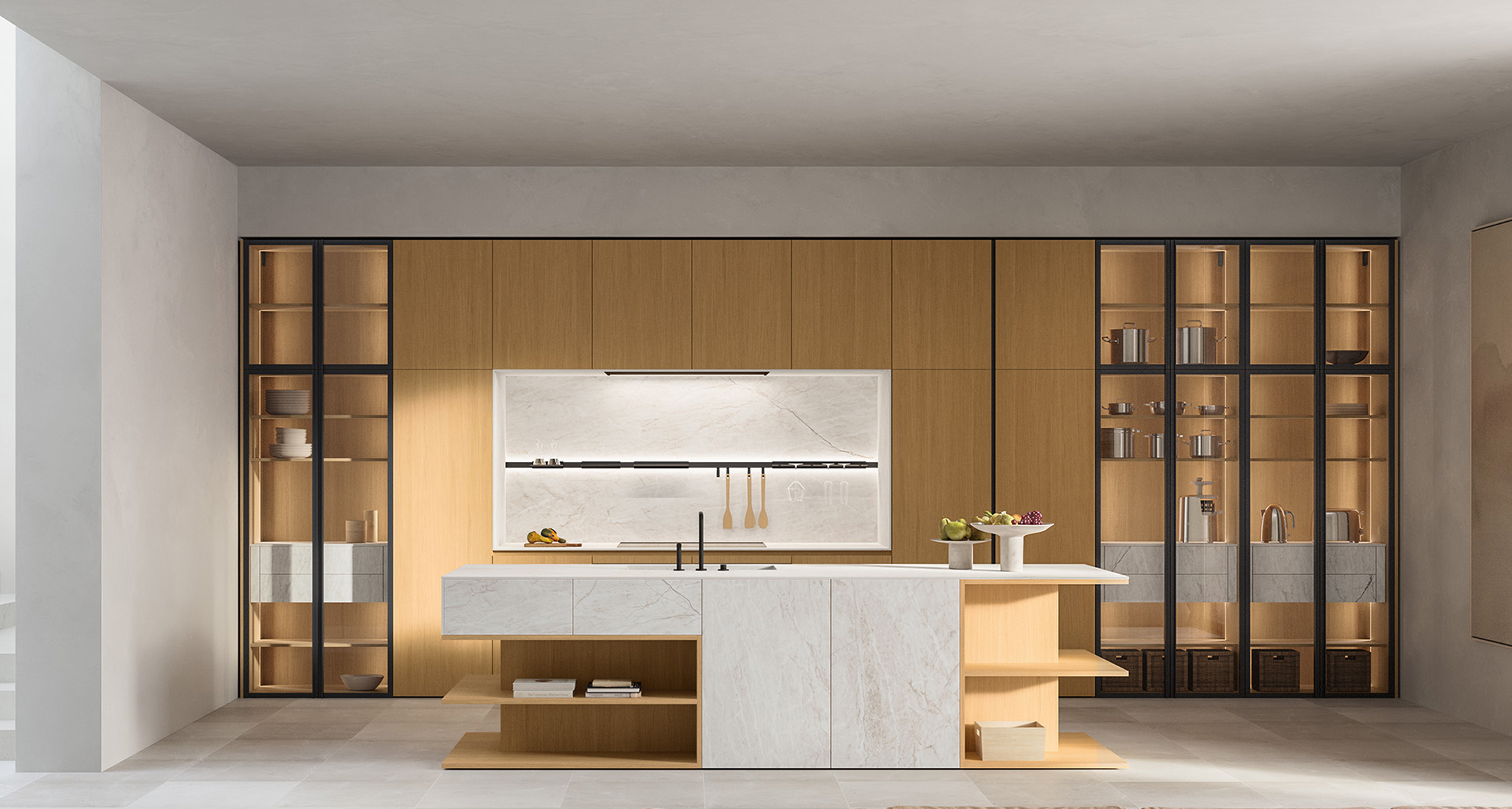
The Nordic contribution is a whole philosophy: light, airy, honest materials and nothing superfluous. Scandinavian cabinets favour pale woods — white oak, ash, birch — often in flat slab fronts that let the grain do the talking. Finishes stay natural or lightly whitewashed, and hardware is minimal or absent.
The point is atmosphere. In climates with long, dark winters, these kitchens are engineered to feel bright and serene, and that same quality translates beautifully to any home craving a sense of quiet. It’s minimalism with a heartbeat.
Best for: Bright, uncluttered kitchens that prize natural materials and a soft, welcoming mood.
6. English Slim Shaker
Shaker is often assumed to be American, but its refined, pared-back English interpretation has become a modern classic — and designers now overwhelmingly name slim Shaker as the door style of the moment. The recessed centre panel and framed border remain, but the rails and stiles are drawn narrow, giving the door clean geometry with just a whisper of traditional detail.
That balance is exactly why it endures. Slim Shaker sits comfortably in a period cottage or a new-build, in painted sage or deep navy, making it one of the safest choices for resale without feeling generic.
Best for: Transitional kitchens that want a touch of craftsmanship without committing to full traditional or full modern.
7. French Provincial (Country)
At the warmer, more romantic end of the spectrum sits the French country cabinet. Think furniture-like detailing, gently curved profiles, glazed or distressed painted finishes, and open plate racks or glass-front uppers. Where the German box hides its craft, the French cabinet celebrates it — visible hinges, turned feet, and all.
Modern versions dial back the fuss: a soft chalky paint, a bit of beadboard, aged brass hardware developing its own patina. The result is a kitchen that feels collected over time rather than installed in a weekend.
Best for: Farmhouse, cottage, and characterful homes that want warmth, texture, and a lived-in soul.
8. Natural Wood Veneer
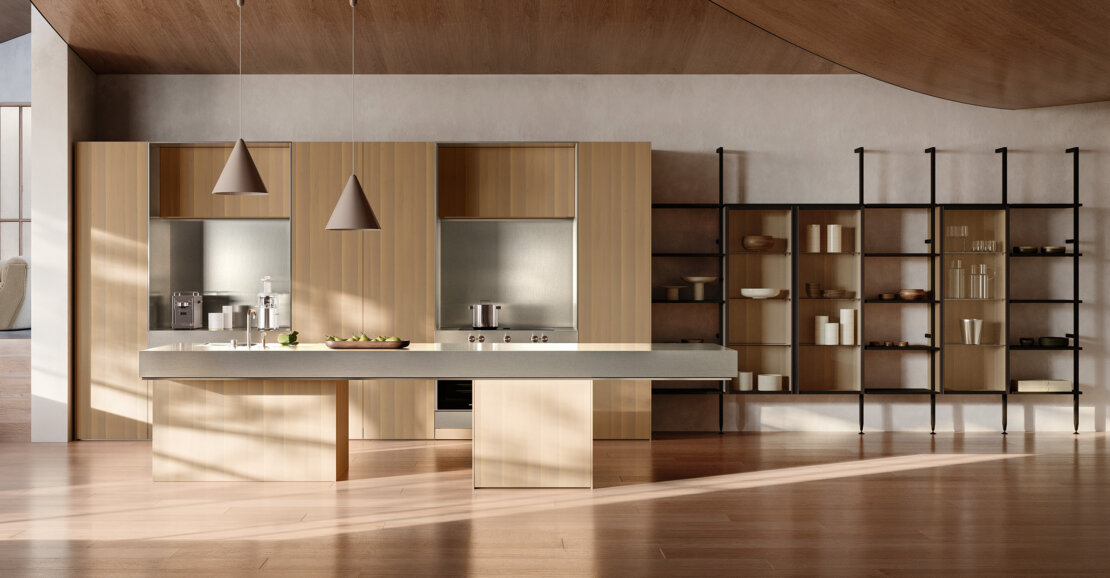
After years of painted fronts, real wood is back — and 2026 belongs to darker, richer species. Walnut, roasted and smoked oak, and deep-toned teak are replacing the pale oak of recent years, with nearly 60% of professionals reporting rising demand for dark wood. The luxury detail to look for is sequence-matched veneer, where the grain flows continuously across adjacent doors like a single plank.
Veneer offers the beauty of solid timber with better stability across large flat fronts, which is why premium European makers rely on it. Left natural, wire-brushed for texture, or cerused for a contemporary edge, it brings genuine depth that paint simply can’t imitate.
Best for: Warm, sophisticated kitchens that want the character of real grain, especially in two-tone schemes.
9. Fluted and Reeded Texture Fronts
The newest direction in European cabinetry adds texture without adding ornament. Fluted (concave grooves) and reeded (convex ridges) fronts run vertical channels across doors, drawers, and island panels, catching light and shadow to create rhythm and depth on an otherwise flat surface. Slatted and tambour treatments do the same job with a more architectural feel.
It’s the antidote to flat-surface fatigue. A fluted island or a run of reeded uppers introduces craftsmanship and shadow-play while staying firmly within the clean-lined, handleless world — detail you feel more than you notice.
Best for: Contemporary kitchens looking to break up large flat expanses with tactile, light-catching interest.
10. Two-Tone and Color-Block
Finally, the compositional strategy that ties much of 2026 together: two-tone. Rather than a single finish throughout, designers pair contrasting tones — most resolvedly a dark wood-grain base against warmer neutral uppers, sometimes with a curved island in a third accent colour like muted navy, olive, or deep forest green.
The logic is layering, not contrast for its own sake. A well-balanced two-tone kitchen defines zones, adds visual depth, and lets you introduce a bolder colour in a controlled dose. It’s how you make a minimalist kitchen feel personal rather than showroom-blank.
Best for: Almost any style above — two-tone is less a look than a technique for adding dimension.
Choosing Your Style
The ten styles here aren’t mutually exclusive — the best European kitchens borrow freely. A German frameless box can wear a slim Shaker front; a handleless system can be finished in matte lacquer, natural walnut veneer, or fluted oak. A few principles to steer by:
- Start with construction, then finish. Decide frameless vs. framed first; it shapes cost, storage, and every aesthetic choice that follows.
- Match the finish to your life. High-gloss dazzles but shows marks; matte and textured fronts forgive daily use.
- Invest in the hardware you can’t see. Hinges, runners, and lift systems from quality European makers are what separate a kitchen that ages gracefully from one that sags in five years.
Whichever direction you lean — the engineered calm of a German box, the glamour of Italian gloss, or the warmth of French country — the throughline of European design is the same: quiet quality over loud decoration, built to last.
Ready to bring one of these styles home? Book a consultation and let our team help you translate the look you love into a kitchen built to European standards — or Get a Quote to start your project.