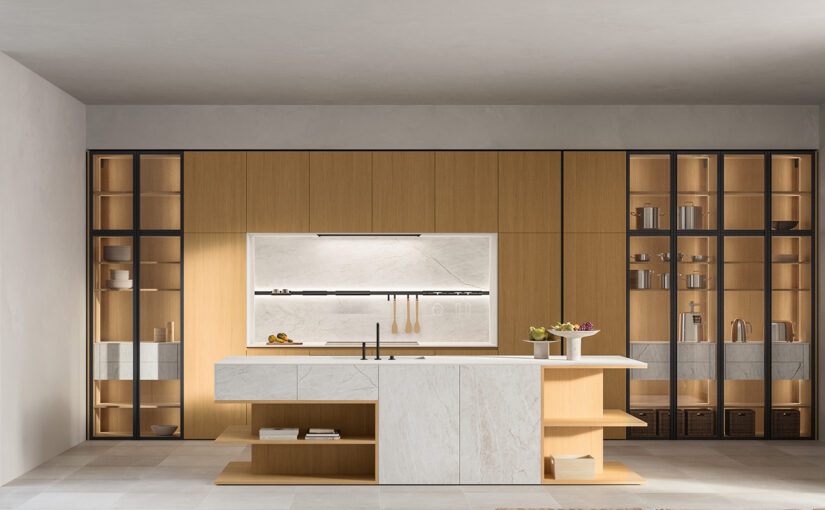
A kitchen is one of the biggest purchases you’ll make for your home, so the news that matters most isn’t always a new color or a new handle. This year, Doimo Cucine has been busy on three fronts: proving how its kitchens are made, showing what its new Impronta collection looks like in real rooms, and putting its artistic director on stage. Here’s what’s new, and what it means if you’re planning a kitchen.
Independent Proof of Quality: Two New Certifications
As of July 2026, Doimo Cucine kitchens carry two new certifications from the Catas Certification Institute, the leading Italian testing and certification body for the European wood and furniture sector. Because Catas is an independent third party, these aren’t marketing claims — they’re verified results.
The first is the Catas Quality Award, completed with the Mechanical Safety Requirements programme. It shows that Doimo’s kitchens meet the testing methods set out in the European standard EN 14749:2016+A1:2022, and it supports compliance with the EU’s General Product Safety Regulation. The notable detail: Doimo says it is the first company in the Italian furniture sector to be certified for an entire product system rather than a single product.
The second is the Italian Origin of Furniture certification. It makes “Made in Italy” something you can verify rather than simply read on a brochure: semi-finished components must be manufactured, or receive their final processing, in Italy, and the products must pass Catas performance tests for safety.
Why it matters to you: a kitchen is used every day for many years. These are European standards rather than US ones, but independent testing on safety and origin is still a practical way to compare brands beyond appearance, and a good question to put to any European kitchen maker you’re considering.
La Cocina como Impronta: The Impronta Collection at Casa Decor Madrid
From April 9 to May 24, Doimo Cucine used Casa Decor, the itinerant Spanish interior design event, to show its new Impronta collection in a lived-in setting. Now in its 61st edition, this year’s Casa Decor was hosted in a 19th-century building on Calle San Agustín in Madrid’s literary quarter, the Barrio de las Letras, which is being converted into a hotel.
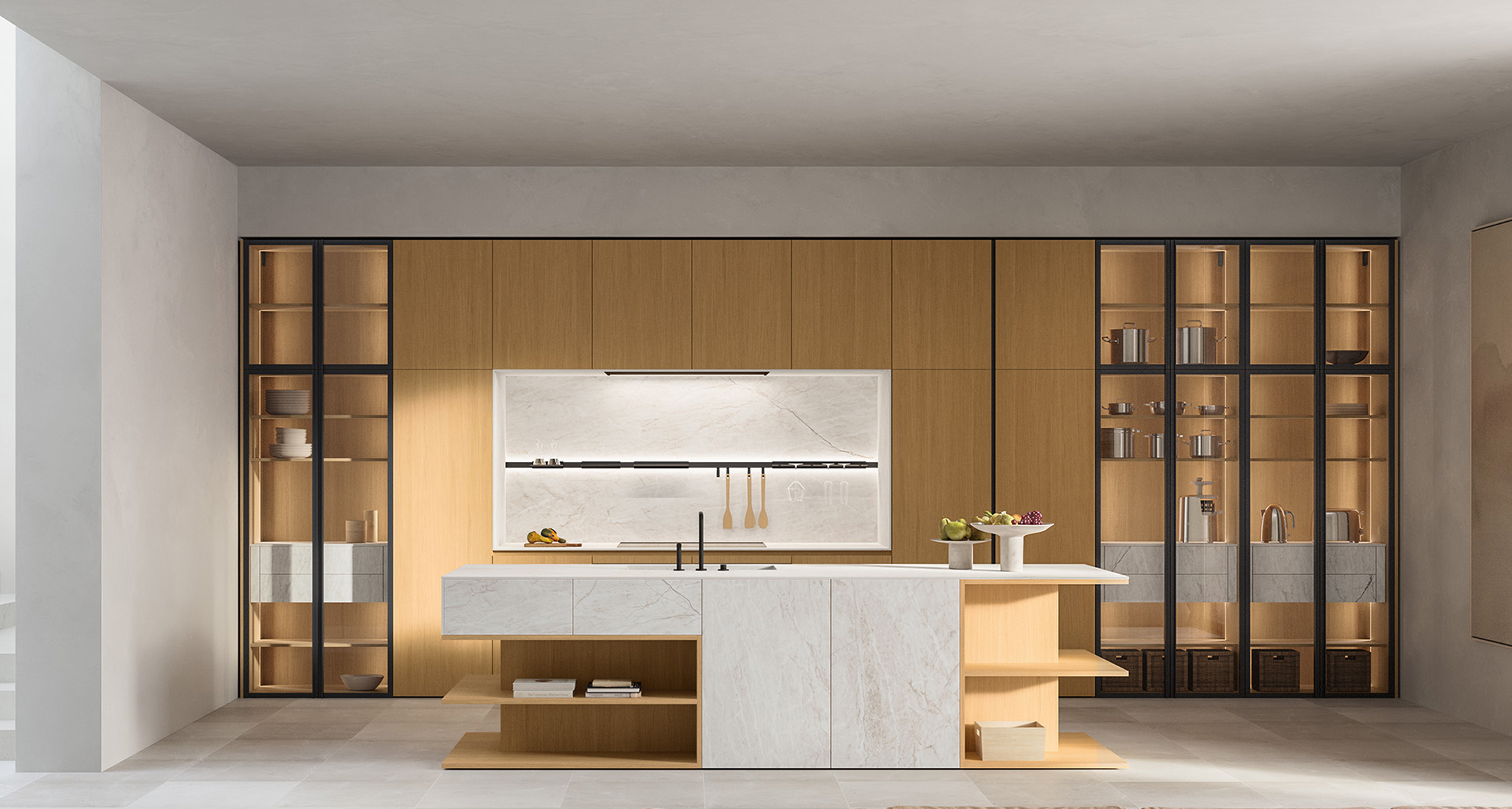
The installation, titled “The Kitchen like an Impronta,” was built around Desco, one of the compositions in the new Impronta collection designed by architect Ferruccio Laviani and his team. Desco centers on an essential island that is warm and functional, with a minimal, natural design made to be lived in rather than admired from a distance. The listed materials tell the story: vertical oak veneer, a supersilver glass door, and marble-look porcelain stoneware. There’s even a surprise, a wine cellar tucked behind the linear kitchen units and reached through a door panel.
On April 28, Doimo and porcelain manufacturer Florim hosted an invitation-only presentation for interior designers, architects and journalists, using Florim’s matte marble-effect porcelain in the kitchen and the wine room.
Ferruccio Laviani on Why the Kitchen Matters
On June 18, Laviani, Doimo Cucine’s artistic director, sat down at .Ettore, the Doimo family’s historic shop in Treviso that now works as a concept store, for a conversation with Aurelio Magistà, editor-in-chief of Repubblica Design. The evening traced four decades of design, from a career that began almost by accident to collaborations with Achille Castiglioni, Alessandro Mendini, Kartell, Foscarini, Molteni&C, Flos and others.
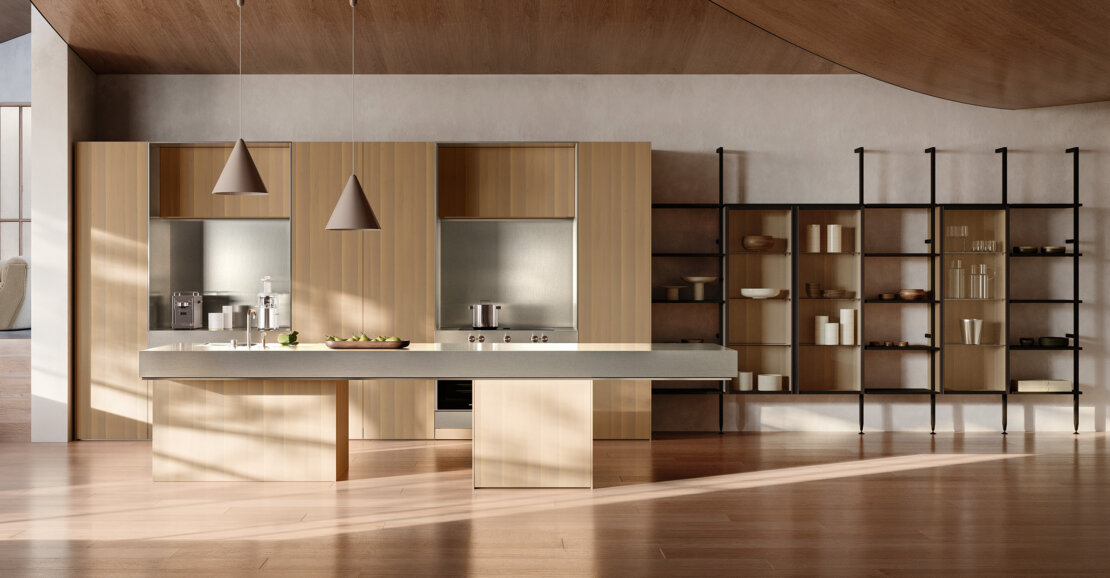
What stood out for anyone planning a kitchen was how he thinks about the room. He sees it as a creative laboratory and a place for sharing, and he explained that he built versatility into Impronta on purpose, because the way people cook has changed with the pandemic and with modern life. He prefers a closed kitchen for himself, and he even has one in his studio so his team can eat well together around a table.
What to Take From It
Put together, the news points in one direction: Doimo Cucine is investing in verifiable quality and in a warm, natural design language built around how people actually cook. If you’re comparing Italian kitchens, it’s worth asking every brand the same questions: is the quality independently tested, is the Italian origin verifiable, and does the design suit how you really cook?
Want to see how Italian kitchens like these could work in your home? Book a consultation with our design team — or Get a Quote to get started.